Protect Your Pets with Preventative Measures
Implementing precautionary steps is essential to safeguard your pets during the holiday season. Being mindful of these five common hazards can help you avoid an emergency trip to the vet.
1. Holiday Tinsel and Ornaments
Although tinsel is non-toxic, it can be highly enticing for pets, especially cats. The glimmering, hanging decorations catch light and sway with the slightest breeze, drawing the attention of curious animals.
The real danger arises when tinsel is ingested, which can lead to grave injuries. If not handled promptly, this kind of foreign body ingestion can result in life-threatening situations as it twists and knots within your pet’s intestines. Immediate veterinary attention is crucial. Additionally, colorful ornaments can pique your pet’s interest. To prevent accidents, hang glass, aluminum, and paper ornaments higher on the tree. Pets may chew on these fragile decorations, and broken pieces can create sharp edges that can harm your pet’s mouth, throat, or intestines, posing a choking risk.
2. Holiday Lights and Candles
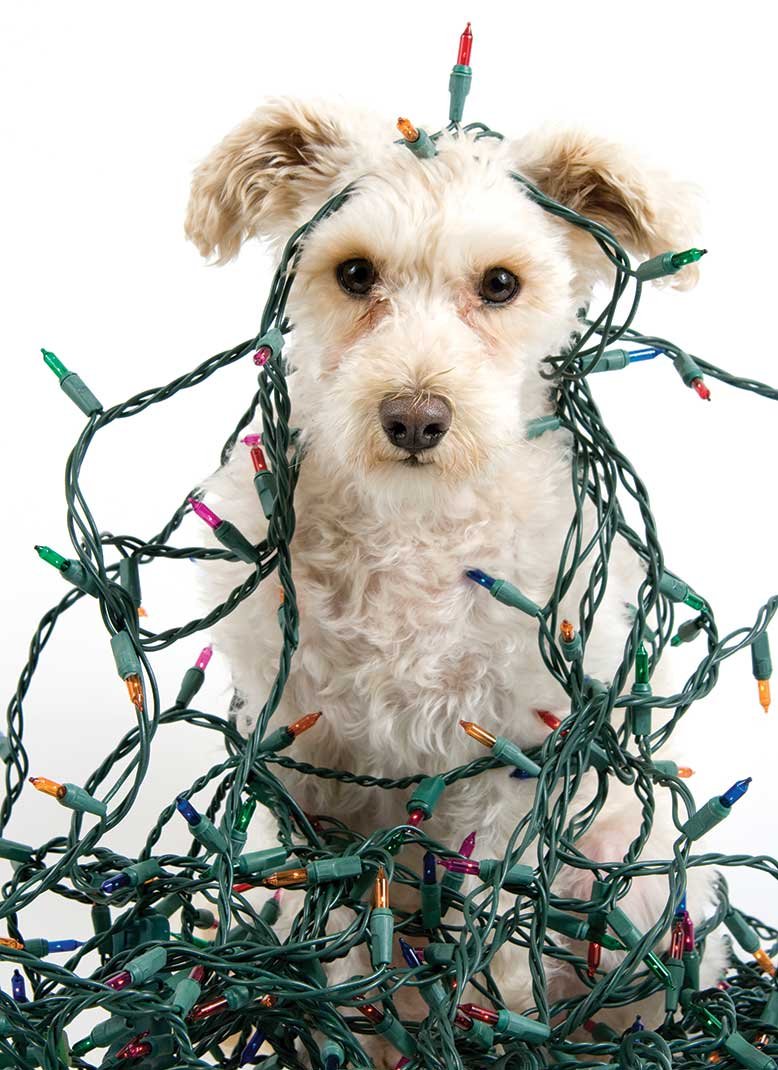
If you have a pet that enjoys chewing, be cautious with the various types of holiday lights—icicle, netting, and rope variations can all be hazardous.
An electrical mishap could occur if your pet bites into a cord, leading to serious injuries or even death. Regularly inspect your holiday lights for any signs of wear or chewing, and utilize a grounded three-prong extension cord as an extra safety measure. For candles, position them where your pets cannot reach them. Pets risk severe burns, and if a candle is knocked over, it could ignite a fire or leave hot wax that can burn their paws.
-Dr. Brian Benjamin, Ohio Drive Animal Hospital
3. Gift Wrap Ribbons
While it might be tempting to adorn your pet with a festive ribbon “necklace,” it’s important to note that this could pose a choking hazard.
Moreover, be proactive in disposing of ribbons and bows from gifts to prevent your curious pets from chewing or swallowing them. Consuming ribbon can lead to choking or serious complications within their intestines, potentially requiring emergency surgery.
4. Food Hazards
Holiday celebrations often bring an abundance of treats, some of which can pose serious risks to your pets.
Certain festive favorites, like chocolate and nuts, can be highly toxic or even deadly to animals. Chocolate contains varying levels of fat and caffeine, along with methylxanthines, which stimulate the nervous and cardiovascular systems. While humans process these substances fairly quickly, pets metabolize them at a slower rate, leading to more severe effects. Depending on the type and quantity ingested, pets can experience a range of symptoms, including vomiting, diarrhea, muscle tremors, excessive panting, and seizures, which could also lead to death.
Additionally, popular holiday nuts such as almonds, walnuts, macadamia nuts, and pistachios can upset your pet’s stomach or even obstruct their throat and intestines, causing severe repercussions. Though peanuts, roasted cashews (not raw), and hazelnuts are generally non-toxic, these should only be given in moderation.
Moreover, offering dogs fat trimmings and bones is dangerous. Fat, whether cooked or raw, could trigger pancreatitis, and while giving dogs bones may seem natural, these items can splinter and cause blockages or tears in their digestive system.
5. Toxic Holiday Plants
Although many holiday plants are beautiful, some can be toxic or even lethal. For instance, just one leaf from any lily type is fatal to cats. Additional plants to be wary of include:
Pine needles from Christmas trees can cause oral discomfort, vomiting, diarrhea, lethargy, and other severe symptoms. Holly, often associated with Christmas, can induce intense vomiting, diarrhea, and lethargy. Mistletoe can lead to significant gastrointestinal distress, respiratory difficulties, and, in severe cases, collapse or hallucinations upon ingestion.
Poinsettias may also cause irritation to the mouth and stomach, with some instances of vomiting.
By taking these precautions, you can help ensure that your pets remain safe and healthy throughout the holiday festivities!
Content courtesy of: Veterinary Pet Insurance,A Nationwide Company