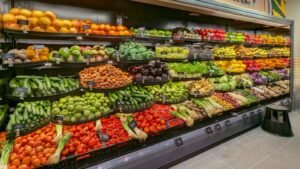
According to the 2026 Shopper’s Guide to Pesticides in Produce, leafy greens like spinach and kale, along with perennial favorites such as strawberries and grapes, exhibited the highest levels of potentially harmful pesticide residues in government testing.
This year’s “Dirty Dozen” list, which outlines the fruits and vegetables with the most pesticide contamination, includes nectarines, peaches, cherries, apples, blackberries, pears, potatoes, and blueberries. This report was released on Tuesday by the Environmental Working Group (EWG), a health-focused advocacy organization.
Leading the list is spinach, which contains more pesticide residue by weight than any other vegetable and on average has four or more different pesticides, according to EWG, which has been releasing this report annually since 2004.
Aside from potatoes, which had an average of two pesticide residues, samples of every other produce type contained an average of four or more. Experts express concern about consuming produce with multiple pesticides, as the combined exposure may accumulate and increase health risks.
In preparing the report, EWG reviewed the most recent USDA pesticide residue tests on 54,344 samples from 47 different fruits and vegetables.
The USDA inspects each sample after peeling or scrubbing and thoroughly washing them to simulate consumer preparation at home. Despite these precautions, traces of 264 pesticides were found, with 203 appearing on the Dirty Dozen list.
2026 ‘Dirty Dozen’ fruit and vegetables: Nearly all tested positive for pesticides, including ‘forever chemicals’
Children are particularly vulnerable to pesticide exposure, even before birth, according to guidelines set by the American Academy of Pediatrics.
Toxic substances in our food
This year’s report indicated that over 60% of all Dirty Dozen samples contained pesticides known as “forever chemicals,” specifically PFAS (perfluoroalkyl and polyfluoroalkyl substances). These chemicals are termed “forever” because their molecular structure can take an extensive time, sometimes even centuries, to break down in the environment.
Experts emphasize that the solution is not to eliminate fresh produce from our diets; instead, fruits and vegetables are essential to a healthy lifestyle. The recommendation is to consume a wide variety of fruits and vegetables.
Selecting more items from the “Clean Fifteen” list and fewer from the Dirty Dozen, or opting for organic versions of the most contaminated fruits and vegetables, can significantly lower pesticide exposure, noted EWG science analyst Varun Subramaniam.
Research has shown that people who consume more organic foods compared to conventionally grown produce have lower pesticide levels in their bodies, he added.
Regardless of the type, all fruits and vegetables should be washed before preparation to avoid transferring dirt and bacteria. The US Food and Drug Administration (FDA) recommends drying produce with a clean cloth or paper towel after washing.
Firmer vegetables such as carrots, cucumbers, melons, and potatoes should be scrubbed with a clean vegetable brush under running water. Other produce can simply be rinsed gently under water. Bleach, soap, or specialized produce washes are unnecessary since fruits and vegetables can absorb these chemicals.
When dealing with leafy greens like cabbage and lettuce, the outer leaves should be removed, and each leaf rinsed carefully—avoid harsh water pressure to prevent bruising the greens.
Don’t forget to wash any colander afterward, except for “triple-washed” packaged greens, which the FDA states do not require further washing.
Among the 47 items assessed in the analysis, these 12 were found to have the highest pesticide contamination:
SEE THE LIST
Minimizing pesticide exposure
In addition to the annual report, EWG compiles a “Clean Fifteen” list each year, highlighting nonorganic produce with the least pesticide residues.
These 15 items were identified as having the lowest pesticide levels, as per EWG’s evaluation of the latest USDA data.
SEE THE LIST