
Making healthy choices for your meals at home doesn’t have to be overwhelming; it simply demands some dedication and planning while grocery shopping. By making straightforward modifications to your eating habits, like centering your meals around fruits, vegetables, wholesome proteins, and whole grains, you can pave the way for improved health.
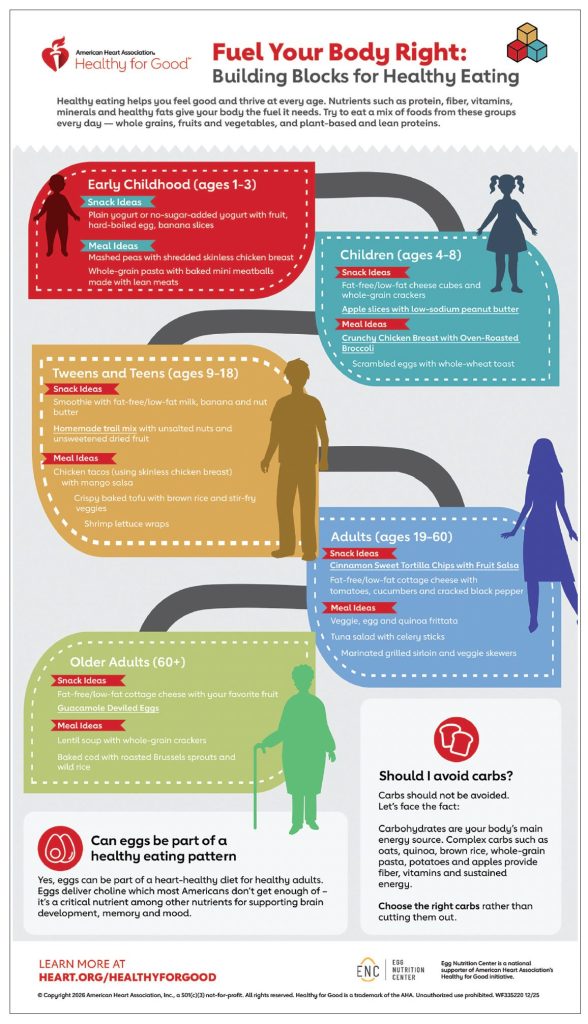
Planning nutritious meals can be simple, economical, and flavorful—all it takes is a bit of balance. The American Heart Association’s Healthy for Good initiative, supported nationally by the Egg Nutrition Center, offers guidance to create a well-rounded, healthful plate.
Fill Half Your Plate with Fruits and Vegetables
Abundant in essential nutrients, fresh fruits and vegetables should be the foundation of any meal. Aim to fill approximately half of your plate with a variety of options like bananas, strawberries, blueberries, sweet potatoes, peas, and carrots, along with other personal favorites. To introduce more diversity to your meals, consider trying different fruit and vegetable combinations or explore new options outside your usual selections.
Grocery tip: Frozen fruits and vegetables can often be more affordable while retaining their delicious flavor. They are typically frozen immediately after harvesting, preserving their freshness for a longer period. Just remember to avoid varieties that contain added sugars or salt.
Allocate a Quarter of the Plate to Protein Sources
Nutritious foods serve not only as energy but also as nourishment. Look for flexible protein options such as skinless chicken breast, low-sodium beans, canned tuna with no added salt, tofu, or eggs.
High-quality proteins from these foods, combined with regular exercise and a balanced diet, can assist in maintaining muscle health. Eggs, along with lean animal proteins and select plant proteins, exemplify this concept.
The American Heart Association suggests that healthy individuals can safely consume up to one whole egg per day, or seven each week, within a heart-healthy eating plan. For older adults with normal cholesterol levels, two eggs per day are considered fine.
Eggs are an excellent source of both protein and choline, which is vital in supporting brain and body development, especially during formative years. In fact, many individuals do not sufficiently consume choline, an essential nutrient for brain health and cognitive function.
Grocery tip: Choose protein sources that are both versatile and budget-friendly to enable the preparation of multiple meals each week without excessive costs. Eggs, for instance, can be incorporated into any meal—not just breakfast. Use them in wraps or omelets for breakfast, hard-boil them for salads at lunchtime, or include them in a frittata for dinner.
Reserve a Section for Whole Grains
Lastly, dedicate that remaining quarter of your plate to whole grains, many of which are rich in dietary fiber that promotes a healthy heart and digestive system. In contrast, most refined grains provide little to no fiber.
Examples of whole grains include barley, brown rice, corn, oatmeal, rolled or steel-cut oats, popcorn, quinoa, sorghum, and wild rice, as well as products labeled “whole grain” or “whole wheat,” such as bread or pasta.
Grocery tip: Select whole grains that simplify meal preparation. Items like corn tortillas, instant oats, and popcorn can contribute to creating healthy meals and snacks quickly. It’s a good idea to keep precooked brown rice handy for enhancing favorite dishes or mixing with leftovers to complete a nutritious meal.
For more nutrition tips geared towards heart-healthy dining, visit Heart.org.