By Pam Melyan-Bratton | Contributor
In today’s fast-paced world, children are inundated with a multitude of distractions—school, homework, family obligations, friendships, chores, and gaming. So, how can we assist our children in finding serenity amidst this chaos? According to April Linson, a breathwork healing facilitator and certified yoga instructor, “In a time when attention is fragmented, the need for meditation has never been more pressing.”
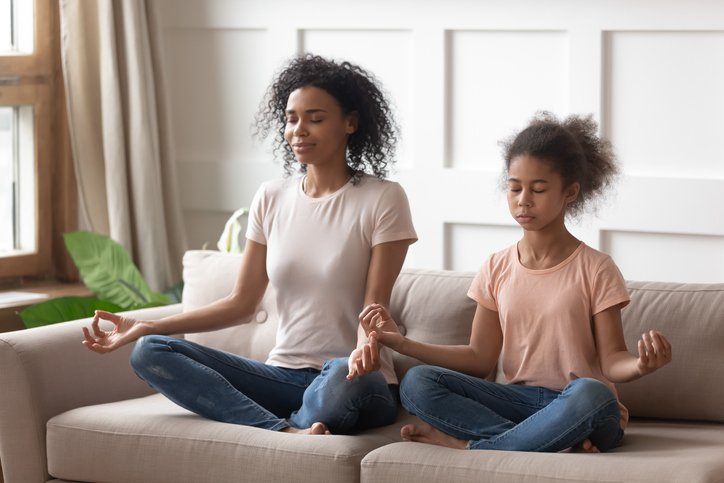
From an early age, children can benefit from practicing meditation and mindfulness. With over eight years of experience in teaching and practicing mediation, Linson notes that children possess an inherent ability to connect with the frequencies around them, including the natural rhythms of their environment and the emotional states of those around them. Using meditation can help children engage with their emotions and manage their energy effectively.
“With mindfulness practices, the focus on being present is essential, allowing us to avoid dwelling on the past or worrying about the future.”
Begin with Simplicity
Linson recommends beginning meditation practices with a duration of 5 to 10 minutes. For younger children, establishing a routine can make a significant difference. “Repetition is crucial for learning and habit formation. Start with five to ten minutes, and gradually increase the time as the child becomes more accustomed to the practice,” she suggests.
Echoing this sentiment, Mary N. Budd, MA, a school counselor, emphasizes that simplicity is vital when introducing mindfulness to her students. “For middle schoolers, I believe in keeping practices straightforward. The focus should always be on compassion, self-care, and being present while tuning into their breathing.”
Energy Release Techniques
To prepare children for meditation, Linson advises allowing them to expend some energy first. “Kids are naturally inquisitive and easily excited, so before settling them into stillness, engage them in a brief energetic activity, like freeze dance,” she suggests. “Movement before meditation can ease their transition into calmness, and short, simple practices lay the groundwork for longer sessions in the future.”
Mindfulness Approaches
Budd guides her students in mindful breathing for one minute, encouraging them to concentrate on their breath. “I explain that this can be challenging and if their thoughts drift, it’s perfectly fine to return their focus to the breath. This minute is simply a brief opportunity to pause and be present,” she shares.
Whether working in groups or individually, Budd often starts sessions with a Body Scan activity. “This exercise helps students connect with their physical sensations and emotions. They are encouraged to release any negative feelings on their exhale and invite in positive sensations on their inhale, which sets a welcoming tone for our time together,” she explains.
Linson teaches two types of meditation suitable for young children. The first is walking meditation, which allows movement while meditating. She suggests going barefoot to enhance their awareness and connection to the earth. As they walk, children can choose affirmations to repeat, such as, “I am strong” or “I am here.”
“We begin this walking meditation by focusing on their feet. When taking the first step, they lift one foot off the ground, place the heel down first, then the middle of the foot, and finally the toes while reciting their chosen affirmation. After that, we switch to the other foot, repeating the steps,” Linson explains. This meditation can continue for several minutes or as long as the child’s attention holds.
Linson also practices breathwork meditation with children of all ages. “To start, I ask the child to close their eyes, placing one hand on their belly and the other on their heart,” she says. She encourages them to listen closely to the sounds around them and to their breathing. “I guide them to trace their breath as it passes through their nostrils, fills their belly, ribcage, and chest, and then follow it back out,” she adds.
Staying Calm and Collected
Before students leave Budd’s office, she invites them to envision wearing a tool belt filled with new strategies they can carry forward after their time together. “In mindfulness practice, remaining present is paramount—focusing on the moment rather than the past or future,” she emphasizes.