By The National Rosacea Society | Contributor
Individuals dealing with rosacea now have access to a broader array of treatment options than in the past; however, dermatologists stress that effective skin care is essential to maximize these treatments. In recognition of April as Rosacea Awareness Month, The National Rosacea Society (NRS) aims to inform the public about this chronic skin condition, which affects over 16 million Americans. The organization encourages anyone who suspects they might have rosacea to consult a dermatologist for accurate diagnosis, effective treatment, and advice on gentle skin care practices.
“The significance of skin care and cosmetics in the management of rosacea is often overlooked,” remarked Dr. Hilary Baldwin, an associate professor of dermatology at Rutgers Robert Wood Johnson Medical School and a member of the NRS medical advisory board. “Using gentle cleansers, moisturizers that enhance the skin’s moisture barrier, and sunscreens that safeguard against rosacea flare-ups can significantly complement medical treatments.”
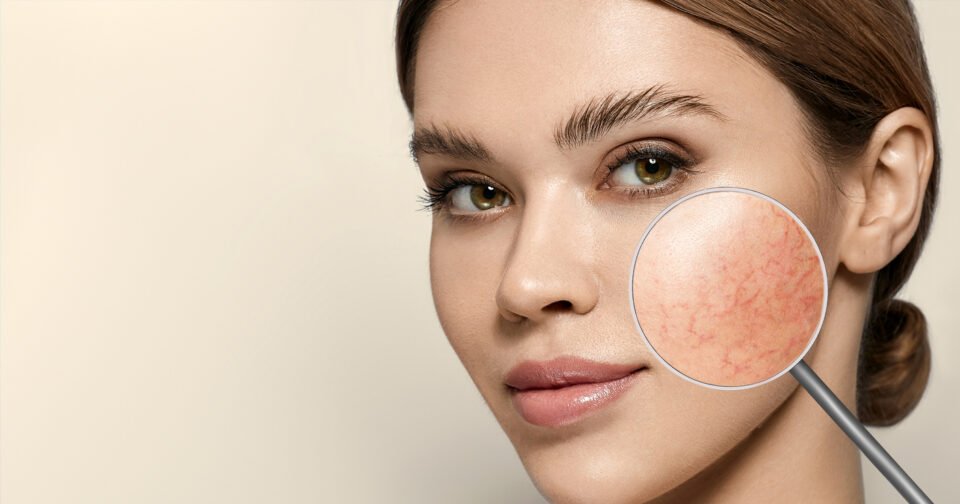
A primary symptom of rosacea is chronic redness on the face, particularly around the cheeks, nose, forehead, and chin. This redness may be accompanied by itching, burning sensations, or stinging, and individuals may notice bumps and pustules or small visible blood vessels. Before a proper diagnosis, many rosacea sufferers may resort to various skin care products and makeup in an attempt to mask or alleviate these symptoms, often misinterpreting them as signs of sunburn or acne.
Many rosacea sufferers may turn to skin care products and cosmetics as a way to address or conceal these signs and symptoms before receiving a diagnosis, often mistaking them for acne or sunburn. However, aggressive cleansers, acne treatments, and even conventional soap can intensify the issue by irritating or drying the skin and harming the moisture barrier.
Indeed, some products, such as harsh cleansers and topical acne medications, might exacerbate the condition by irritating the skin. Additionally, long-term use of topical whitening agents can lead to a painful order known as steroid-induced rosacea. Interestingly, even some skin care and cosmetic items labeled as “gentle” may include components that trigger a rosacea flare-up.
According to an NRS survey involving 1,104 rosacea patients, 82% indicated that particular skin care products and cosmetics worsened their symptoms, while 70% identified specific ingredients that irritated their skin. The most commonly reported irritants were astringent alcohol (63%), fragrances (57%), witch hazel (31%), and menthol (30%). Approximately 25% of respondents also mentioned irritation from peppermint or eucalyptus oil, dyes, sulfates, and preservatives like parabens.
“While the appropriate use of skin care products and cosmetics can help reduce the visibility and impact of rosacea, inappropriate choices can aggravate the condition,” explained Dr. Baldwin. “Fortunately, many modern products are designed specifically for sensitive, rosacea-prone skin and lack ingredients that may provoke flare-ups. These can be safely combined with prescription treatments that more directly target the symptoms and signs of the condition.”
In 2019, the National Rosacea Society Expert Committee released updated management guidelines for rosacea, which recommend the use of gentle cleansers and non-occlusive moisturizers that are unlikely to irritate the skin.1 As sun exposure can significantly contribute to flushing and redness, patients are advised to consistently apply sunscreen, ideally mineral-based formulations containing zinc oxide or titanium dioxide, since these offer physical protection as opposed to potentially irritating chemical options.
Optimal outcomes are achieved when patients collaborate with their healthcare providers to select the right therapies and track their progress.
Dr. Hilary Baldwin, associate professor of dermatology at Rutgers Robert Wood Johnson Medical School
The NRS has recently introduced a Seal of Acceptance program to identify skin care and cosmetic products deemed suitable for individuals with rosacea. More details regarding the Seal, as well as a directory of approved products, can be found online at rosacea.org/seal-of-acceptance.
Throughout Rosacea Awareness Month and beyond, the NRS will engage in public education initiatives to connect with the millions affected by rosacea who may not recognize their condition as a treatable medical issue, urging those who suspect they have rosacea to consult a dermatologist.
Individuals seeking educational resources can visit the NRS website at rosacea.org; call the NRS toll free at 1-888-NO BLUSH; or email at info@rosacea.org.
What is Rosacea?
Rosacea is a chronic skin disorder characterized by episodes of flare-ups and remissions. The updated standard classification defines the condition by the presence of persistent facial redness, or in some cases, thickening of the facial skin. 2 Key additional signs, which often accompany the primary symptoms, include papules (bumps), pustules (pimples), flushing, visible blood vessels, and certain eye-related symptoms. The presence of two or more major features in conjunction with the primary signs also confirms the diagnosis of rosacea, with secondary symptoms including burning or stinging sensations, swelling, and dryness.
About the National Rosacea Society
The National Rosacea Society is the leading organization dedicated to enhancing the lives of the estimated 16 million Americans affected by this widespread yet often misunderstood condition. Its mission includes raising awareness, offering public health information about rosacea, and supporting medical research aimed at improving its management, prevention, and potential cures. More information is available at rosacea.org.
References:
1. Thiboutot D, Anderson R, Cook-Bolden F, et al. Standard management options for rosacea: the 2019 update by the National Rosacea Society Expert Committee. J Am Acad Dermatol 2020; 82(6):1501–1510. doi:10.1016/j.jaad.2020.01.077
2. Gallo RL, Granstein RD, Kang S, et al. Standard classification and pathophysiology of rosacea: The 2017 update by the National Rosacea Society Expert Committee. J Am Acad Dermatol 2018; 78(1):148-155. doi:10.1016/j.jaad.2017.08.037