NEVER FORGET…
by Melissa Chaiken | Section Editor
As an enthusiastic reader, I embrace a diverse array of genres—spanning fiction, non-fiction, classics, historical narratives, mysteries, thrillers, and biographies. Yet, there are moments when I receive recommendations from friends or my book club that lead me to glance at the title or synopsis with a hint of reluctance. I’m specifically referring to books that tackle the Holocaust; often, I find myself thinking, “Do I really want to delve into this again?” The emotional weight of such reading—the profound pain, the heart-wrenching memories—can feel overwhelming, as these stories force us to confront some of humanity’s darkest chapters. However, I quickly remind myself of the significance of these narratives: isn’t that precisely why they must be told? Many individuals lead sheltered lives, completely unaware of the unimaginable horrors faced by those in Nazi concentration camps or under the iron grip of tyrants. It troubles me to consider how our lack of genuine hardship may be impacting us and future generations. Therefore, preserving the memories of these dark periods ensures that history is not forgotten, nor is it allowed to repeat itself. What better medium for this preservation exists than through storytelling?
Recently, I immersed myself in three narratives that explore the reign of terror inflicted by the Nazis during World War II. Set in various European nations, specifically Belgium, France, and Holland, these stories, while distinct, share a common thread of Nazi oppression that shattered lives.
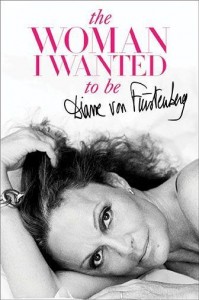 The first book, The Woman I Wanted To Be by Diane von Furstenberg, is a memoir where the renowned fashion designer reflects on her upbringing in Brussels and her relationship with her mysterious mother, Lily. As a child, she was unaware of the reason behind the two blue tattoos on her mother’s arm, wishing only to emulate them so her own arms would not seem so ordinary. It was only later that Diane discovered her mother was among the 25,631 Belgian Jews deported to concentration camps during the Holocaust, barely surviving Auschwitz, weighing only fifty-nine pounds upon release. Despite her struggles, Lily’s resilience and refusal to succumb to victimhood shaped Diane’s values, emphasizing independence, freedom, and self-reliance. Diane understands that her mother was transforming her painful past into a source of strength, as independence and freedom were vital to her after their loss, and self-reliance was what had kept her alive.

― Anthony Doerr, All the Light We Cannot See
All The Light We Cannot See by Anthony Doerr presents a unique narrative about a blind French girl named Marie-Laure and a German orphan boy named Werner. As the Nazis seize control of Paris, Marie-Laure and her father flee to live with her distant uncle in the fortified city of Saint-Malo. Meanwhile, Werner grows up in an orphanage, honing his skills in constructing and repairing radios—an essential tool of warfare during World War II. His expertise soon garners the attention of Nazi leaders, and he leaves the orphanage for a Hitler Youth academy. As Werner develops his skills, he unwittingly aids in the tracking and extermination of the French Resistance. As the story unfolds, he begins to grasp the human toll of his actions, ultimately leading him to cross paths with Marie-Laure in Saint-Malo. While not explicitly centered on the Holocaust, the novel powerfully conveys the brutality of the Nazis towards any individuals deemed obstacles to their genocidal agenda.
– Maria Spronk-Hughes, The Red Handkerchief
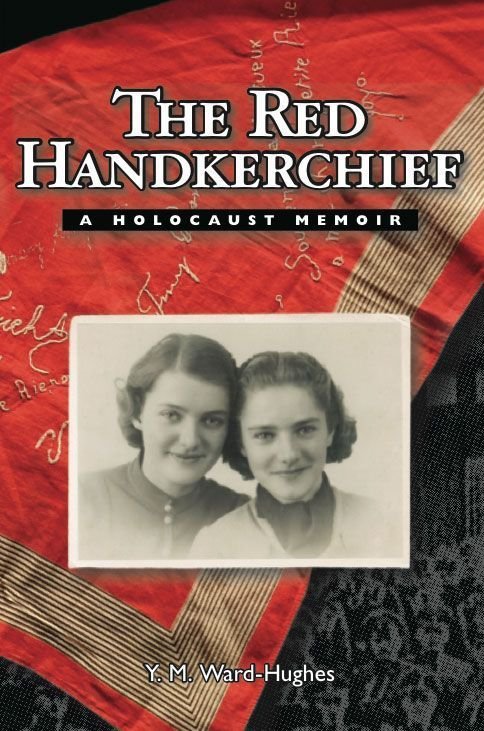
The Red Handkerchief: A Holocaust Memoir by Y.M. Ward-Hughes tells the remarkable true story of the author’s mother and aunt as they recount their capture and imprisonment by the Nazis. I was astounded to discover that the sisters, Maria (Rie) and Catharina (Katy) Spronk, were Roman Catholic, not Jewish. In 1941, while working in a raincoat factory seized by the Nazis, they refused to comply with orders to make Nazi uniforms. The young women, ages 19 and 20, joined a nationwide strike protesting the treatment of Dutch Jews and continued their resistance efforts amidst the escalating danger. Captured by the Gestapo in 1944 and sent to Vught Concentration Camp, they received red handkerchiefs as part of their uniforms; Rie had her fellow inmates sign the handkerchief, which she would later embroider with messages of support. After fifty-seven years of silence, Rie was eventually persuaded by her daughter to share her story with Dr. Ariel Levy at the Houston Holocaust Museum. Dr. Levy emphasized the urgency of documenting the experiences of survivors, leading to the creation of the memoir, while the red handkerchief symbolizes hope, camaraderie, and resilience—now displayed at the Houston Holocaust Museum. To obtain The Red Handkerchief online, visit www.theredhandkerchief.com.
The insights these works provide serve as a timeless reminder that we must continually honor the memory of those who suffered senseless violence and brutality. They are cautionary tales highlighting that the Holocaust was not a distant past and that we must actively work to prevent such history from repeating itself.
Have you had the chance to visit the Dallas Holocaust Museum? Discover more details here.
Do you participate in a book club? We invite you to share your insights with us at melissa@Themerrythought.net.